Goldman Sachs2026-10-19 08:30:56CoreWeave and France Expose Two Pressure Points in a High-Rate WorldTwo seemingly unrelated developments landed in the market at the same time: the yield on CoreWeave’s 9.75% notes due 2031 surged to 15.7%, while France faced a sharp rise in long-dated sovereign yields as political and fiscal strains deepened. Goldman Sachs rates strategist David Curtin put both cases inside the same framework, arguing that high interest rates are turning the global financial system into a pressure vessel where stress concentrates around debt loads, refinancing needs, and weak cash flow. In CoreWeave’s case, the issue is not a collapse in AI demand. Goldman’s read is that financing cost and financing scale have become the real fault line. The company’s debt-funded model for buying Nvidia GPUs and building AI infrastructure worked far better in a low-rate setting than it does when spreads blow out and CDS prices imply a much higher default risk. The bank also pointed to a broader split across AI-linked credit, with issuers such as Oracle, SpaceX, Meta, and Google trading at very different long-end spreads. France reflects the sovereign version of the same problem. Its 30-year bond yield has risen far more than Germany’s since the Iran war shock, while the OAT-Bund spread widened sharply. Goldman argues that fiscal looseness and AI capital spending are now two of the strongest forces pushing long-end yields higher. If tighter financing conditions cool AI spending, yields could fall back, but that relief would come with slower investment, lower valuations, and weaker revenue expectations across the AI chain.440
US Treasuries2026-10-09 13:43:51U.S. Treasury term premium hits multi-year highs as fiscal deficits and AI-driven debt issuance add pressureLong-dated U.S. Treasury yields kept rising on Oct. 9, with market attention shifting away from the Federal Reserve’s rate path and toward the term premium embedded in longer-maturity bonds. A New York Fed model showed the 10-year Treasury term premium has climbed by about 40 basis points since mid-September to roughly 0.98%, the highest level since 2014, while the 10-year yield rose about 30 basis points over the same period. A separate model that incorporates economists’ rate forecasts put the term premium at 1.08%, the highest since 2010. Analysts said the move suggests long-end yields may no longer be driven only by expectations for Fed policy, but also by investors demanding more compensation for inflation risk, fiscal concerns, bond supply, and liquidity uncertainty. The report also pointed to the U.S. annual fiscal deficit of about $2 trillion and a wave of debt issuance tied to AI infrastructure spending. According to Reuters data, Alphabet, Amazon, Meta, Microsoft, and Oracle have issued about $220 billion in debt this year, more than double the level seen in the same period last year. That combination of sovereign and corporate borrowing could keep funding costs elevated.810
Policy Regula2026-10-08 04:03:08Warren presses Bessent over expanded Treasury buybacks as long-term yields keep climbingU.S. Treasury Secretary Bessent is facing fresh scrutiny after expanding long-dated Treasury buybacks while long-term yields continue to rise. Senator Elizabeth Warren, the top Democrat on the Senate Banking Committee, sent a letter on Wednesday asking the Treasury Department to explain a series of recent actions in the government bond market. She described them as an "unprecedented and chaotic intervention" and asked whether Treasury plans to fund additional long-bond buybacks by reducing the cash balance in the Treasury General Account, or TGA. Warren also asked whether Treasury is weighing other steps to push down long-term yields and how much higher rates have already fed through to household borrowing costs such as mortgages and auto loans. She requested a response by Oct. 21. The questions come after Treasury unexpectedly expanded long-bond repurchases on Aug. 19, outside its usual quarterly financing window, lifting the cap on some 10-year to 30-year buybacks from $2 billion to $6 billion. Bessent said the move was meant to improve liquidity in older issues, but his public comments also led markets to see the program as an attempt to slow the rise in long-term yields. So far, that has not happened: the 10-year yield has climbed back to its highest level since 2002, while the 30-year yield has hovered near 5.7%, close to a more than two-decade high.580
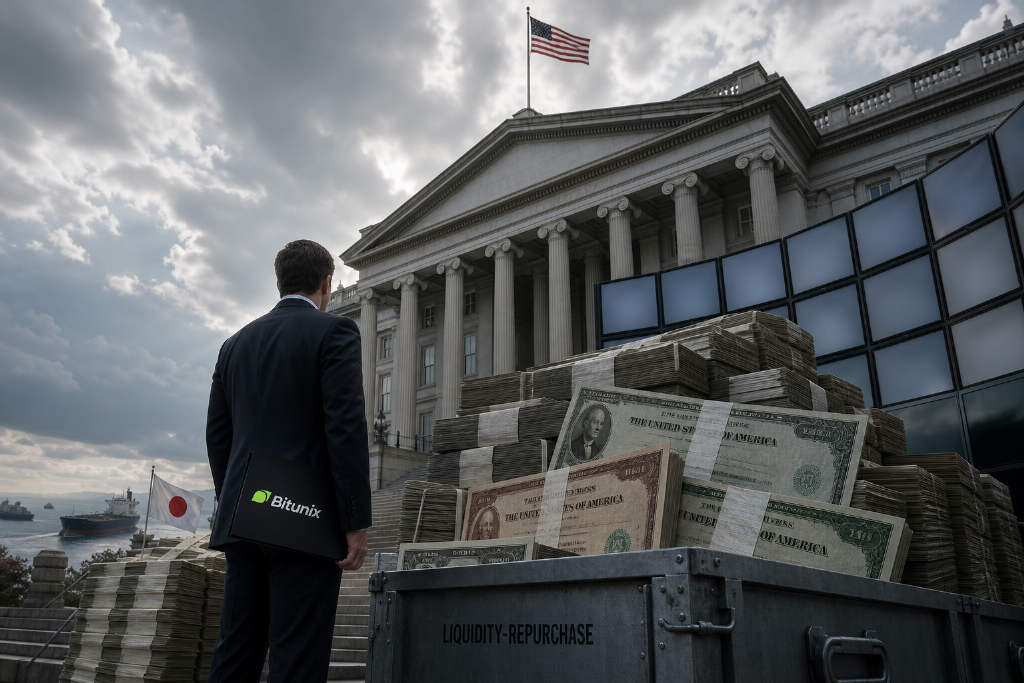
Bitunix2026-10-08 02:38:34Bitunix analyst says Treasury buybacks are failing to cap long-end yields as markets reprice a higher-rate regimeA Bitunix analyst said the market focus in the US long-end rate market has shifted beyond Federal Reserve expectations to a more direct question: whether the Treasury’s own debt-management tools can still change pricing. According to BlockBeats, Treasury Secretary Bessent expanded the buyback cap for 10-year to 30-year US Treasurys to $6 billion, partly to improve liquidity in off-the-run bonds. Even so, the 10-year yield climbed to 5.35% and the 30-year yield approached 5.7%, both above levels seen before the August expansion of the program. The note argues that if more policy tools do not lower long-term yields, investors will naturally revisit what is actually driving them higher. The analyst pointed to heavy supply, fiscal deficits, and a higher term premium demanded by investors. The report also said actual buyback volumes remain below the cap, showing the Treasury is not providing an unconditional backstop. Funding buybacks with TGA cash or short-term debt would only alter the maturity structure rather than reduce the government’s total financing need. The same backdrop is reshaping cross-asset comparisons. A Bank of America model suggests the S&P 500 may return less than 5% over the next decade, while Treasurys already offer more attractive starting yields. For BTC, the analyst said price action remains range-bound near $83,487, with liquidity around $87,000 and near-term support at $82,929.440
Policy2026-09-01 07:41:02Tom Lee: Bitcoin Can Easily Break Six Figures, $150K Still PossibleFundstrat's Tom Lee said on CNBC that very few people actually hold cryptocurrency, which makes it easy for Bitcoin to break into six figures — above $100,000 — though rate hikes could weigh on it. He noted long-term yields have already moved higher; if the Fed hikes while long-term yields fall, that would effectively be monetary easing, so the key is how long-term yields react to Fed tightening. Lee added that the current move is only the first wave, catching many investors off guard. Institutions are clearly buying crypto-related stocks, with trading volume surging, signaling bets on a big fourth-quarter rally. He still sees $150,000 as possible and not too far away.1000
Bitunix2026-09-01 07:13:18Bitunix analyst says elevated long-bond yields may persist as Fed rate expectations shape Treasuries and goldA Bitunix analyst said the yield on the 30-year U.S. Treasury has closed above 5% for 55 straight trading sessions, marking the longest such stretch since 2006. The note argues that pressure on long-end rates is no longer only about inflation. With U.S. debt above $40 trillion and the fiscal deficit running at about 6% of GDP, the market is also contending with heavy government funding needs, term premium and concerns over fiscal sustainability. While expanded long-bond buybacks by the Treasury may offer near-term support, the analyst said they mainly improve supply-demand conditions and liquidity in the bond market and do little to remove the steady increase in debt supply. The report frames Federal Reserve policy as the main junction for both Treasuries and gold. If labor and inflation data stay resilient, expectations for a September rate hike may remain in place, supporting short-end rates while fiscal pressure keeps long-end yields elevated. For gold, the key issue is not simply whether rate hikes are bearish, but whether rising yields reflect Fed tightening expectations or fiscal supply pressure. That distinction, the analyst said, could determine whether gold remains under pressure or shows relative resilience.1030
Federal Reser2026-08-28 06:58:25Warsh heads to Jackson Hole as markets weigh inflation, long yields and Fed independenceFederal Reserve Chair Kevin Warsh is set to speak on Friday at the Jackson Hole central banking conference, with investors looking well beyond any simple rate hint. The immediate backdrop is difficult: US inflation remains above the Fed’s 2% target, oil prices are still above pre-conflict levels as the Iran conflict unsettles global markets, and long-dated Treasury yields are hovering near their highest levels since 2007. At the same time, the US Treasury has expanded liquidity-support buybacks for longer-dated nominal coupon securities, adding a fresh layer of complexity to how markets read the line between debt management and monetary policy. The Financial Times editorial board argues that Warsh’s bigger task is to explain his policy framework. That includes how he plans to restore inflation to 2%, how he views the tightening effect of higher long-term rates, and how he intends to protect the Fed’s independence as the White House pushes for lower borrowing costs. The piece says investors are less in need of a precise rate path than a coherent explanation of how Warsh weighs inflation, growth, financing conditions and political pressure. Without that clarity, the market may continue to demand an uncertainty premium in Treasuries, the dollar and broader global funding costs.1150
Bitunix2026-08-25 07:52:30Bitunix analyst says Treasury buybacks are unlikely to ease pressure on long-dated U.S. yieldsA Bitunix analyst said on Aug. 25 that long-dated U.S. Treasury yields remain elevated and that the U.S. Treasury Department’s expanded buybacks of long-term government bonds are unlikely to materially push those yields lower. In the analyst’s view, buybacks mainly improve market liquidity and do little to change the core pricing drivers for the long end of the curve. Those drivers remain the U.S. fiscal deficit, inflation, Treasury supply, and global capital allocation. The analysis also pointed to continued U.S. financing demand and AI-related capital spending as factors keeping demand for long-term funding high, which could leave the term premium elevated. It added that pressure in the Treasury market is linked to global bond-market moves and energy-related risks. Higher Japanese long-bond yields could encourage Japanese capital to return home and add selling pressure to U.S. Treasuries, while risks tied to the Strait of Hormuz, Russian refineries, and Red Sea shipping could raise refined fuel, insurance, and transport costs, adding uncertainty to global inflation. For crypto markets, the analyst said elevated long-end Treasury yields keep the cost of dollar funding high and continue to weigh on valuations for more volatile assets.1400